

Introduction
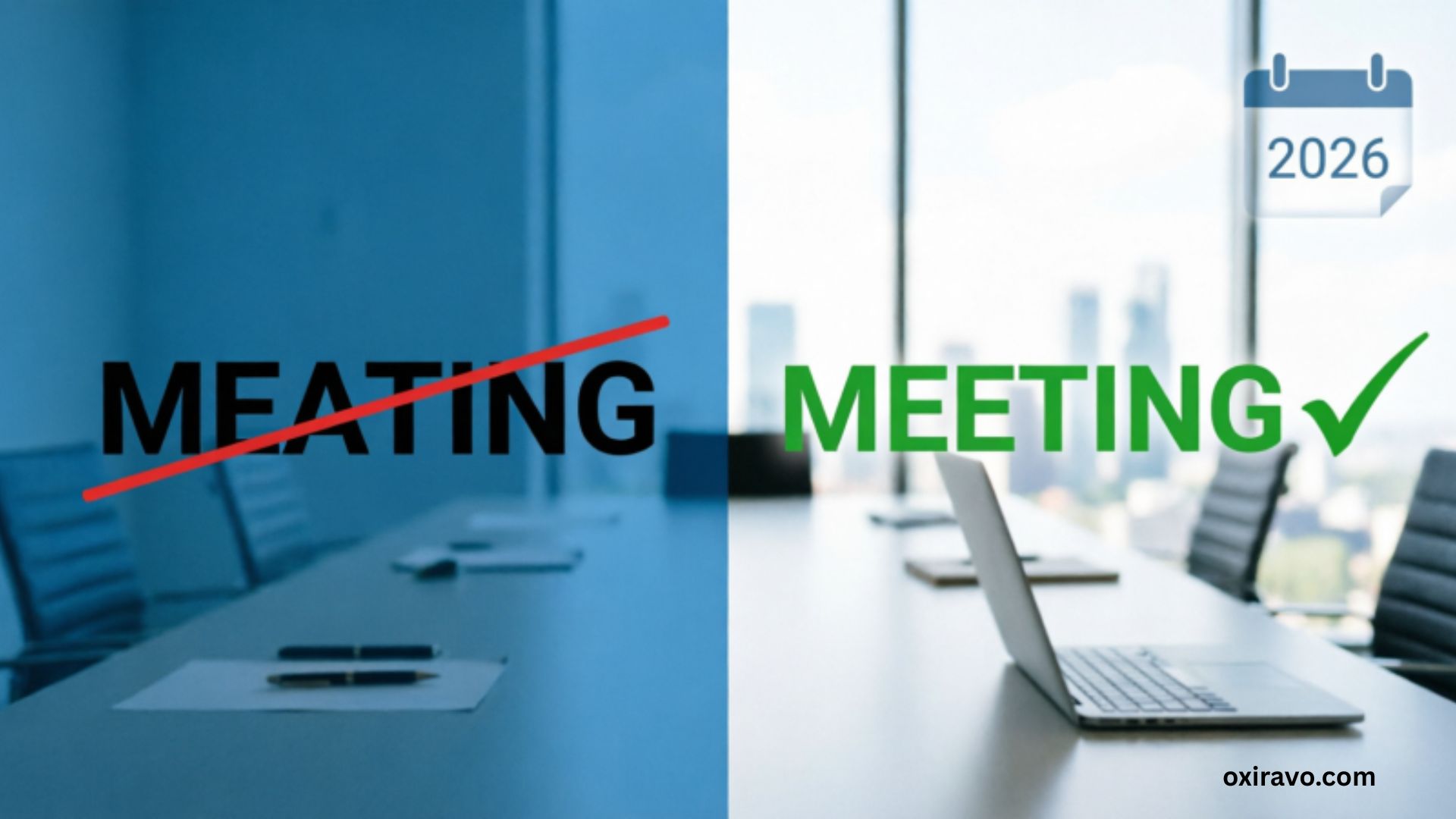
Have you ever typed “meating” instead of “meeting” and wondered whether it was actually correct? You’re not alone. Every day, thousands of people make this simple spelling mistake while writing emails, sending text messages, completing school assignments, or preparing business documents. At first glance, the two words look almost identical. However, they have very different meanings and uses in the English language.
Understanding Meating vs Meeting is important because using the wrong word can make your writing appear careless or confusing. In professional settings, a single spelling error in an email or report may affect how others perceive your attention to detail. Fortunately, this is one of the easiest mistakes to fix once you understand why it happens.
The confusion usually comes from the words meet and meat. Since both words are common in English, many people accidentally combine the spelling of one with the meaning of the other. This leads to one of the most common English spelling mistakes seen in workplaces, schools, and online communication.
In this comprehensive English grammar guide, you’ll discover:
- Meeting meaning
- Meating meaning
- The Difference between meating and meeting
- Whether meating is actually a real English word
- The Correct spelling of meeting
- Practical examples and scenarios
- Tips to avoid future spelling mistakes
By the end of this guide, you’ll know exactly which word belongs in every situation.
Meeting Definition
Let’s begin with the correct word.
A meeting is an event where two or more people gather to discuss ideas, solve problems, make decisions, or exchange information. Meetings may happen in person or online.
The Meeting definition can be summarized as:
A planned gathering of people for discussion, collaboration, decision-making, or communication.
This is the accepted word in dictionaries, academic writing, and professional communication.
Common Types of Meetings
- Business meeting
- Team meeting
- Office meeting
- Virtual meeting
- School meeting
- Parent-teacher meeting
- Client meeting
- Project meeting
- Board meeting
Because organizations rely on communication every day, meeting is among the most frequently used words in Business English vocabulary.
Meeting Meaning in English
The Meeting meaning in English goes beyond simply gathering people together.
A meeting can involve:
- Sharing updates
- Solving problems
- Making decisions
- Brainstorming ideas
- Planning future projects
- Negotiating contracts
- Teaching or training employees
For example:
- The marketing team scheduled a meeting to discuss next quarter’s campaign.
- Our office meeting begins at 9:00 AM tomorrow.
- The principal called a school meeting for parents and teachers.
Each sentence uses meeting correctly.
Meating Definition
Now let’s examine the word that causes confusion.
The Meating definition is very different.
Historically, meating referred to:
- Hunting for meat
- Supplying meat
- Preparing or processing meat
This usage appeared centuries ago in historical texts and older forms of English.
Today, however, meating is almost never used in everyday English.
Modern dictionaries rarely list it as a standard word for daily communication. Instead, most examples people encounter are simply typing mistakes.
Meating Meaning
So what is the actual meating meaning?
Historically, it described activities connected with meat.
For example:
- Gathering meat through hunting
- Preparing meat for cooking
- Providing meat supplies
Outside historical or highly specialized contexts, this meaning has virtually disappeared.
That’s why modern English speakers almost always mean meeting when they accidentally write meating.
Meating Meaning in English
If someone searches for Meating meaning in English, they’re often surprised by the answer.
Although the word has historical roots, it is not used in standard modern English conversations, workplaces, or schools.
Instead, dictionaries and language experts recognize meeting as the correct word whenever people refer to appointments, discussions, conferences, or gatherings.
Is Meating a Real Word?
One of the most common questions online is:
Is meating a real word?
Technically, yes—but only in historical or highly specialized contexts.
Modern English speakers almost never use it.
If you’re writing about:
- Office discussions
- Conferences
- School events
- Online calls
- Client appointments
then meeting is always the correct choice.
For everyday writing, you should treat meating as a spelling mistake.
Is Meeting Spelled Correctly?
Another common question is:
Is meeting spelled correctly?
Absolutely.
The standard spelling is:
Meeting
Not:
- Meating ❌
- Meting ❌
- Meetting ❌
- Meetin ❌
The word comes directly from the verb meet, which means to come together.
Adding -ing creates:
Meet + ing = Meeting
Difference Between Meating and Meeting
Understanding the Difference between meating and meeting is actually very simple.
| Feature | Meeting | Meating |
|---|---|---|
| Modern English | ✅ Yes | ❌ Rare |
| Used in schools | ✅ Yes | ❌ No |
| Used in workplaces | ✅ Yes | ❌ No |
| Used in emails | ✅ Yes | ❌ No |
| Dictionary support | ✅ Standard | ⚠ Historical |
| Means gathering people | ✅ Yes | ❌ No |
This comparison makes Meeting vs meating much easier to understand.
Whenever you’re discussing people gathering together, choose meeting.
Meating vs Meeting
Let’s compare both words side by side.
Meeting
- Standard English word
- Refers to people gathering
- Used worldwide
- Accepted in academic writing
- Appropriate in Formal English writing
Example:
We have a meeting with the client this afternoon.
Meating
- Historical word
- Connected with meat
- Rarely appears today
- Usually considered a typo
Example:
The ancient villagers spent the morning meating after the hunt.
Even this example sounds old-fashioned because modern English rarely uses the word.
Meeting Spelling
The correct Meeting spelling follows a simple rule.
Start with:
Meet
Add:
-ing
Result:
Meeting
Many learners mistakenly replace the double “ee” with “ea” because meat is another familiar English word.
This creates:
Meating
instead of
Meeting
Understanding this small difference helps eliminate many Common English spelling errors.
Meet vs Meat
The confusion becomes clearer once you compare Meet vs meat.
| Word | Meaning |
|---|---|
| Meet | To come together |
| Meat | Animal flesh used as food |
Notice that:
- Meeting comes from meet.
- Meating looks like it comes from meat.
Since meetings involve people—not food—the correct spelling is easy to remember.
A simple memory trick is:
People meet in meetings. Meat belongs in meals.
Why Do People Spell Meeting as Meating?
One of the biggest reasons for this mistake is pronunciation.
When spoken quickly, meeting may sound similar to meating, especially to English learners.
Other causes include:
- Fast typing
- Autocorrect errors
- Lack of proofreading
- Confusing meet with meat
- Limited exposure to written English
This explains Why do people spell meeting as meating so frequently.
It’s one of the most common Frequently misspelled English words found in emails and online messages.
Correct Spelling of Meeting
The Correct spelling of meeting is always:
✅ Meeting
Never use:
- Meating
- Meetting
- Miting
- Meteing
If you’re writing reports, essays, resumes, or emails, always double-check this word before sending your document.
Doing so improves both Professional communication and Workplace communication.
Correct Usage of Meeting
Understanding the Correct usage of meeting helps you write naturally in every situation.
Use meeting whenever you refer to:
- A scheduled discussion
- A conference
- A classroom gathering
- A company event
- A video call
- A committee session
For example:
- Our virtual meeting starts in ten minutes.
- The team meeting has been moved to Friday.
- The office meeting covered next year’s budget.
- The business meeting lasted two hours because everyone had valuable ideas to share.
Each sentence demonstrates How to use meeting correctly in modern English.
Meeting in Professional Writing
Accuracy matters in Meeting in professional writing because employers notice details.
Imagine sending this email:
The meating will begin at 3 PM.
Most readers will immediately notice the typo.
Instead, write:
The meeting will begin at 3 PM.
That single correction makes your writing appear polished and professional.
Meeting Examples
Here are several correct Meeting examples:
- Our business meeting begins at 10:00 AM.
- Sarah organized a team meeting to review the project timeline.
- Everyone joined the virtual meeting from home.
- The office meeting ended earlier than expected.
- The school meeting focused on student safety.
These examples reflect everyday Word usage in English and demonstrate the correct spelling in context.
Meating Examples
Finding genuine Meating examples in modern English is difficult because the word is rarely used today. Most examples come from historical literature or discussions about food preparation.
Here are a few examples that reflect its older meaning:
- The hunters spent the morning meating after a successful expedition.
- The villagers were meating before winter arrived.
- Historical records mention meating as part of seasonal hunting traditions.
Although these sentences are grammatically possible in historical contexts, you should avoid using meating in modern business, education, or everyday communication.
If your intention is to describe people gathering together, meeting is always the correct choice.
Meeting in a Sentence
One of the easiest ways to remember the correct spelling is to practice writing it.
Here are several examples of Meeting in a sentence:
- Our weekly meeting starts every Monday at 9:00 AM.
- Jessica scheduled a meeting with the new client.
- The department meeting covered next year’s budget.
- Everyone attended the virtual meeting from different cities.
- The school meeting helped parents understand the new policies.
- The project meeting ended with a clear action plan.
- The business meeting produced several innovative ideas.
These examples demonstrate natural Word usage in English across different situations.
Meating in a Sentence
Many English learners search for Meating in a sentence because they assume it’s another version of meeting.
It isn’t.
Historical examples might include:
- The settlers spent autumn meating to prepare for winter.
- Old manuscripts occasionally describe meating during hunting seasons.
Modern examples like these are incorrect:
❌ We have a meating tomorrow.
❌ Please join the meating at noon.
Correct versions:
✅ We have a meeting tomorrow.
✅ Please join the meeting at noon.
Meeting Pronunciation
Another question learners often ask concerns Meeting pronunciation.
The standard pronunciation is:
/ˈmiː.tɪŋ/
Notice that the first syllable sounds exactly like the word meet.
A helpful pronunciation breakdown is:
Meet + ing = Meeting
Many learners mistakenly think the spelling should match the word meat because both words share the same long “ee” sound. English spelling doesn’t always follow pronunciation perfectly, which explains why this mistake is so common.
Business Meeting Spelling Explained
Many professionals search for Business meeting spelling explained because workplace writing demands accuracy.
Whenever you’re referring to a company discussion, conference, client appointment, or internal gathering, the correct phrase is:
- Business meeting
- Team meeting
- Office meeting
- Virtual meeting
Never write:
- Business meating ❌
- Team meating ❌
- Office meating ❌
- Virtual meating ❌
These are considered Common writing mistakes and can leave an unprofessional impression.
Scenario 1: Professional Email
Imagine that Emily, a project manager, needs to notify her team about an upcoming discussion.
Incorrect Email
Subject: Tomorrow’s Meating
Hello Team,
Our meating has been moved to 2:00 PM.
Thanks,
Emily
The typo immediately stands out.
Correct Email
Subject: Tomorrow’s Meeting
Hello Team,
Our meeting has been moved to 2:00 PM. Please review the quarterly sales report before joining so we can make the most of our discussion.
Thank you,
Emily Carter
This example demonstrates effective Professional email writing and reinforces the Correct usage of meeting.
Scenario 2: Workplace Communication
David sends a quick message to his coworker.
Incorrect
Are you joining the meating today?
Correct
Are you joining the meeting today?
A single letter completely changes the quality of the message.
Good Workplace communication depends on small details like proper spelling.
Scenario 3: School Meeting
A teacher sends a notice to parents.
Correct Example
Dear Parents,
You’re invited to our annual school meeting on Friday at 6:00 PM. We’ll discuss upcoming activities, curriculum updates, and opportunities for parent involvement.
Sincerely,
Mrs. Olivia Brooks
This is another example of clear Formal English writing.
Scenario 4: Virtual Meeting Invitation
Remote work has made online meetings part of everyday life.
Example:
Hi Daniel,
Please join tomorrow’s virtual meeting using the Zoom link below. We’ll review project milestones and discuss next week’s priorities.
Best regards,
Sophia Mitchell
Notice how naturally the word meeting fits into modern business communication.
Meeting vs Meating Comparison Table
| Feature | Meeting | Meating |
|---|---|---|
| Standard English | ✅ Yes | ❌ No |
| Modern usage | Very common | Extremely rare |
| Business communication | ✅ Yes | ❌ No |
| Academic writing | ✅ Yes | ❌ No |
| Historical usage | Rare | Yes |
| Dictionary recognition | Standard | Historical or obsolete |
| Everyday English | ✅ Yes | ❌ No |
This Meeting vs meating comparison table summarizes the most important differences at a glance.
Difference Between Meeting and Meating in English
The Difference between meeting and meating in English becomes clear when you look at their origins.
- Meeting comes from the verb meet, meaning to come together.
- Meating is related to meat and historically referred to obtaining or preparing meat.
That historical meaning has almost disappeared from modern English. As a result, nearly every instance of meating today is simply a typo.
How to Use Meeting Correctly in a Sentence
If you’re wondering How to use meeting correctly in a sentence, follow these examples:
- Our meeting begins at 8:30 tomorrow morning.
- The client requested another meeting before signing the contract.
- Everyone appreciated the productive team meeting.
- The office meeting focused on improving customer service.
- We scheduled a business meeting with our international partners.
Whenever you’re referring to people gathering for discussion, use meeting.
How to Avoid Spelling Meeting as Meating
Learning How to avoid spelling meeting as meating isn’t difficult once you develop a few habits.
Remember these tips:
- Think of the base word meet, not meat.
- Proofread important emails before sending them.
- Read your writing aloud.
- Enable spell-check in your word processor.
- Slow down when typing frequently used workplace terms.
- Build your English vocabulary by reading professionally written content.
Small habits prevent many Grammar mistakes and English spelling mistakes.
Why Is Meeting Often Misspelled as Meating?
Many learners ask, Why is meeting often misspelled as meating?
Several factors contribute to the mistake:
- Both words contain the same long vowel sound.
- The words meet and meat are pronounced identically.
- Typing quickly increases the chance of swapping letters.
- Autocorrect occasionally fails to recognize the intended word.
- New English learners sometimes spell words based on pronunciation rather than spelling rules.
These are among the most common Common English spelling errors found in digital communication.
Common Writing Mistakes to Avoid
The confusion between Meating vs Meeting belongs to a larger group of Commonly confused words.
Here are a few examples:
| Incorrect | Correct |
|---|---|
| Meating | Meeting |
| Their going | They’re going |
| Your welcome | You’re welcome |
| Loose | Lose |
| Affect | Effect |
| Then | Than |
Recognizing these patterns helps improve both Business English vocabulary and overall writing accuracy.
Tips to Improve English Vocabulary
If you want to Improve English vocabulary, consistency matters more than speed.
Try these practical habits:
- Read books, articles, and newspapers every day.
- Keep a notebook of unfamiliar words.
- Learn the origins of commonly confused words.
- Practice writing short paragraphs daily.
- Proofread before submitting assignments or emails.
- Review common spelling patterns each week.
Over time, these habits strengthen your English language learning skills and reduce spelling mistakes.
Frequently Asked Questions
Meating or meeting which is correct?
For almost every modern situation, meeting is correct. Use it whenever people gather to discuss, collaborate, or make decisions.
Is meating a correct English word?
Historically, yes. In modern English, it’s considered obsolete and is almost always a typo.
When to use meeting instead of meating?
Use meeting for workplace discussions, school events, conferences, online calls, interviews, and appointments.
Is meating used in modern English?
Very rarely. Outside historical texts or specialized discussions about meat processing, it has virtually disappeared from everyday use.
What is the difference between meeting and meat-related meating?
The Difference between meeting and meat-related meating is simple:
- Meeting involves people coming together.
- Meating historically referred to activities involving meat or hunting.
The two words are unrelated in modern communication.
Final Thoughts
Understanding Meating vs Meeting isn’t just about memorizing a spelling rule. It’s about choosing the right word for the right situation. While meeting is an essential part of modern Professional communication, meating belongs almost entirely to historical English and rarely appears outside specialized contexts.
Whenever you’re writing an email, preparing a report, attending a Business meeting, joining a Team meeting, participating in an Office meeting, or logging into a Virtual meeting, remember one simple rule: people meet, so they attend a meeting.
